Lab-Grown Gemstones Types & Their True Value
Lab grown gemstones, also widely known as lab-created or synthetic gemstones, are artificially cultivated crystals that feature identical chemical compositions, physical hardness, and optical brilliance as naturally mined gemstones. As ethical jewelry consumption gains global popularity, more consumers, jewelers, and industry investors focus on core questions surrounding synthetic gem production, raw material supply, and industry development. This comprehensive guide answers critical user inquiries, including can all gemstones be lab grown, explains professional manufacturing processes, analyzes raw crystal characteristics, and explores the latest industrial development status to deliver authoritative, search-intent-aligned content for beginners and industry practitioners alike.
Can All Gemstones Be Lab Grown?
Which Gemstones Can Be Lab Grown Successfully
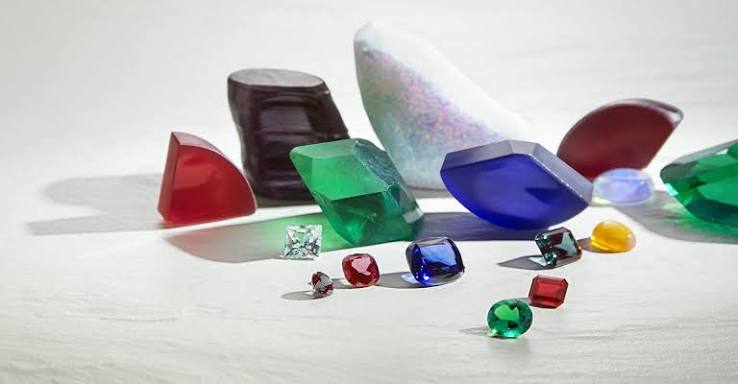
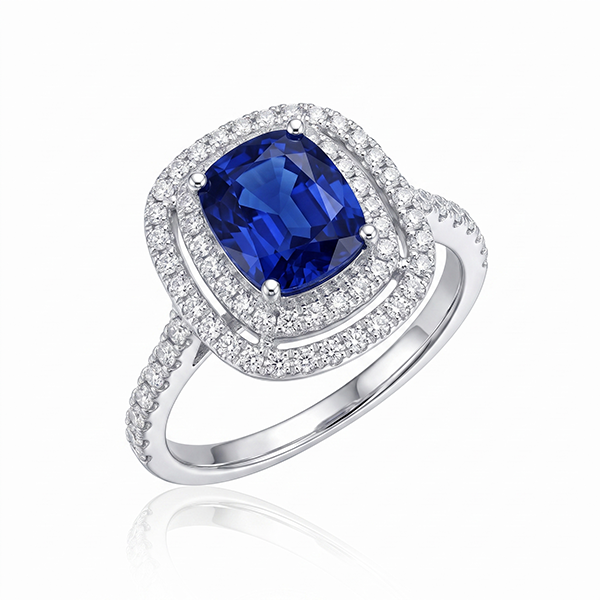
Modern gemological technology has achieved mature mass production for a wide range of popular gemstones, supporting stable commercial supply across the global jewelry industry. Common lab-grown gemstones with standardized industrial production include diamond, ruby, sapphire, emerald, spinel, amethyst, and citrine. These gemstones feature relatively simple and stable crystal growth mechanisms, allowing laboratories to replicate natural geological growth environments accurately. With decades of technical iteration, manufacturers can control color saturation, clarity, and crystal shape stably, making these synthetic stones mainstream alternatives to natural gemstones for commercial jewelry, custom accessories, and decorative applications.
Which Gemstones Cannot Be Lab Grown
Despite advanced synthetic technology, certain gemstones remain impossible to replicate in laboratory environments, primarily organic and fossil-based varieties. Typical non-lab-growable gemstones include amber, coral, natural play-of-color opal, and jet. Unlike mineral gemstones formed by single geological crystallization, these varieties rely on unique biological growth, long-term fossilization, and complex natural organic synthesis processes. Their internal structures contain irregular organic inclusions, biological textures, and fossil traces that cannot be fully simulated by current laboratory equipment. The limitation stems from inherent natural formation logic rather than temporary technical defects, meaning these gemstones can only be sourced through natural mining or collection.
Limitations of Current Lab-Gem Technology
Beyond organic gemstones, current lab-grown technology also faces bottlenecks in replicating ultra-rare high-complexity mineral gemstones. While most common jewelry-grade gemstones support large-scale industrial production, a small number of rare gem varieties only have experimental small-batch synthesis results without commercial promotion value. These experimental products often suffer from unstable color, low crystal integrity, and inconsistent quality, failing to meet jewelry grading and market sales standards. This clear boundary between mature mass production and laboratory experimental synthesis explains why the gemstone synthesis industry cannot achieve full-category coverage currently, resolving common user doubts about universal lab-grown gemstone feasibility.
How Are Lab Grown Gemstones Made?
Core Production Principles
The core production logic of lab-grown gemstones is to artificially simulate the high-temperature, high-pressure geological environments that natural gemstones form within the Earth’s crust over millions of years. By replicating natural crystal growth conditions, laboratories guide mineral raw materials to complete crystallization and growth in a controllable environment. The whole process strictly follows natural gem formation laws, ensuring finished lab-grown gemstones have the same density, hardness, refractive index, and chemical stability as mined gemstones. This fundamental principle guarantees that synthetic gemstones are real gemstones in gemological definition, differing only in growth environment and cycle from natural products.
Main Industrial Manufacturing Methods
The modern gem synthesis industry adopts two mainstream mature manufacturing methods targeting different gem categories, realizing targeted efficient production:
Flame Fusion Method: As a traditional and cost-effective synthetic technology, this method is widely applied in the mass production of ruby and sapphire. It melts high-purity mineral raw materials through high-temperature flame, then cools and crystallizes the molten liquid to form complete gem crystals. Featuring low cost, fast growth speed, and stable output, this technology has become the core process for commercial colored gemstone production and can stably produce high-brightness, high-color-saturation corundum gemstones.
Hydrothermal & Flux Method: This advanced technology is specially developed for difficult-to-grow gemstones represented by emerald and beryl. It simulates the high-temperature and high-pressure hydrothermal environment of underground mineral veins, dissolving raw materials in high-pressure solvent and completing slow crystal growth. The gemstones produced by this method have natural inclusion characteristics and crystal textures, with quality closer to high-grade natural gemstones, effectively solving the technical difficulty of synthesizing high-quality emerald series gemstones.
Step-by-Step Lab-Grown Gemstone Production Process
The complete industrial production process of lab-grown gemstones follows standardized and streamlined steps, forming a mature lab grown gemstone production process. First, producers select high-purity mineral raw materials matching the target gemstone’s chemical composition and configure scientific ratio formulas. Second, crystal seeding is carried out: placing high-quality seed crystals into professional growth equipment to provide growth templates for new crystals. Third, adjust equipment temperature, pressure, and environmental parameters to simulate natural geological conditions and sustain long-term stable crystal growth. Fourth, conduct constant monitoring and parameter adjustment during the growth cycle to avoid impurity mixing and crystal defects. Finally, complete cooling, crystal taking-out, and preliminary screening to obtain complete gemstone blanks, laying a foundation for subsequent cutting and polishing processing.
Lab Grown Gemstone Rough: Complete Guide
What Is Lab Grown Gemstone Rough
Lab grown gemstone rough refers to the original unprocessed crystal blanks directly obtained after laboratory growth, without any manual cutting, polishing, or shaping treatment. Different from finished polished lab-grown gemstones and naturally mined rough stones, lab-grown rough retains the complete original crystal form formed in the controlled laboratory environment. It is the most primitive raw material in the synthetic gemstone industrial chain and the core supply source for gem processing factories, jewelry manufacturers, and gemstone wholesalers.
Features of Lab-Grown Gem Rough vs Natural Rough
There are obvious differences in quality, appearance, and cost between lab-grown rough and natural rough gemstones. In terms of internal quality, lab-grown rough has controllable growth conditions, with fewer natural inclusions, cracks, and impurities, featuring higher crystal integrity and purer texture. In terms of appearance, it has uniform color distribution, stable crystal size, and consistent batch quality, avoiding the uneven color and irregular crystal shape common in natural rough. In terms of cost, lab-grown rough requires no large-scale mining and resource exploration costs, with prices far lower than natural rough of the same grade. Overall, synthetic rough stones have outstanding advantages in purity, stability, and cost performance, making them more suitable for large-scale commercial jewelry production.
Uses & Supply of Lab Grown Gemstone Rough
Raw lab grown gemstones for sale cover multiple application scenarios and support diversified market demands. The most mainstream application is jewelry cutting and processing: processing factories cut and polish rough stones into finished gemstones for inlay rings, necklaces, earrings, and other fine jewelry. In addition, high-quality rough stones with complete crystal forms are favored by gem collectors for original stone collection and specimen research. Some high-hardness synthetic rough stones can also be used for industrial accessories and precision instrument decoration. In terms of market supply, lab-grown rough features sufficient bulk supply, stable batch quality, and complete quality grading standards, supporting global wholesale and customized order services, becoming the core raw material supply of the modern synthetic gem industry.
Lab Grown Gemstones Market: Trends, Growth & Analysis
Current Lab Grown Gemstones Market Size & Statistics
The lab grown gemstones market has maintained rapid and steady growth in recent years, becoming a new growth pole of the global gem industry. Industry data shows that the global lab-grown gemstone market maintains a high compound annual growth rate, with continuous expansion of market scale and increasing penetration rate in the overall gem consumption market. Driven by technological maturity and consumer demand upgrading, the market share of synthetic gemstones in commercial jewelry, custom accessories, and gift markets has risen year by year, gradually breaking the monopoly of natural gemstones in the mid-to-low and mid-to-high-end jewelry markets, and forming a stable industrial scale and market pattern.
Key Market Growth Drivers
The rapid expansion of the lab-grown gemstone market is driven by multiple core advantages, forming irreplaceable industrial competitiveness:
Superior price advantage: Lab-grown gemstones are 60% to 90% cheaper than natural gemstones of the same grade and quality, greatly reducing the consumption threshold of high-quality colored gemstones and diamonds, and meeting the mass consumption demand of ordinary consumers.
Ethical and environmental value: Different from natural gem mining that causes vegetation damage, soil erosion, and ecological destruction, lab-grown gemstone production is pollution-free, low-energy-consuming, and does not involve unethical mining behaviors, conforming to the global green and ethical consumption trend.
Stable supply and quality: Relying on mature laboratory synthesis technology, the industry can achieve stable mass production of rough stones, avoiding the output instability and quality unevenness caused by natural resource scarcity, and ensuring sufficient raw material supply for downstream industries.
Young consumer preference: Modern young consumers pay more attention to cost performance, personalized design, and environmental protection concepts, and are more receptive to synthetic gemstones, becoming the core consumer group driving market growth.
Market Challenges & Limitations
Despite the booming development, the lab-grown gemstone industry still faces obvious market challenges. First, consumer cognition differences exist: some consumers still have misunderstandings about synthetic gemstones, questioning their authenticity and collection value. Second, the industry lacks unified global authoritative grading standards, resulting in uneven product quality and chaotic market pricing in some regions. Third, market competition is increasingly fierce, with a large number of manufacturers entering the track, leading to homogeneous competition in low-end products. In addition, the secondary trading system of lab-grown gemstones is not perfect, which restricts its appreciation and circulation value compared with rare natural gemstones.
Frequently Asked Questions
Are lab grown gemstones real gemstones?
In strict gemological standards certified by GIA and other authoritative institutions, lab-grown gemstones are real gemstones. They have exactly the same chemical composition, physical properties, and optical characteristics as natural gemstones. The only difference is the growth environment: natural gemstones grow underground over millions of years, while lab-grown gemstones mature in a controlled laboratory environment in a short cycle. Synthetic gemstones are not fake or imitation stones, but standardized real gemstones with stable quality.
Will lab-grown gemstones keep their value in the market?
Lab-grown gemstones have stable use value and certain market circulation value, but their appreciation potential is different from high-value rare natural gemstones. Due to sufficient mass production capacity, ordinary lab-grown gemstones maintain stable market prices and are suitable for daily wear and practical collection. High-quality, large-carat, rare-color lab-grown gemstones with excellent cutting craftsmanship have higher preservation value and can maintain stable market value in the long term. However, they cannot replicate the scarcity premium of top natural gemstones with unique natural textures.
Lab-grown gemstone technology has achieved mature commercial coverage of most mainstream jewelry gemstones, while organic and fossil gemstones cannot be artificially synthesized due to natural structural limitations. Supported by standardized industrial processes such as flame fusion and hydrothermal methods, lab-grown gemstones can produce high-purity, high-quality raw rough stones, with obvious advantages in quality stability and cost compared with natural rough stones. Driven by environmental ethics, cost performance, and young consumer demand, the global lab-grown gemstone market is in a period of rapid growth, with broad development space in 2026 and beyond. Although the industry faces cognition and standardization challenges, it has become an irreplaceable important part of the global gem industry, providing consumers with ethical, affordable, and high-quality gemstone choices.